Obviously it has been a while since I posted an update, and an update is certainly in order. So much so, in fact, that I don't know where to begin. Within the past few weeks, I learned that I am over two-thirds of the way to my fundraising goal of $14,000 (Glory, hallelujah!); I said goodbye to my parents, who are moving to Texas and whom I may not see for over a year; I've been working as the Assistant Director of Adventure Education at a summer camp, where a "typical day" might include scheduling ropes course activities, observing the operation of said ropes course activities, inspecting gear, helping set up/tear down different "things" (intentionally broad noun), checking in with and teaching my staff, watching the radar (it's been a very wet summer so far), and assisting with general camp programming; and, I came to the rather startling realization that I am scheduled to leave the country in less than two months. Now to break that all down a bit.
I'll start with a story about funds. Once a month, around the middle of the month, I receive an update from the OPC Foreign Missions Office detailing the financial support given the previous month. Prior to my May update, which I expected around June 15, I was at approximately $5,000 with another $2,000-ish pledged. In other words, I was about half-way to my goal. Consequently, with only a few months left before my intended departure, I still felt a little uncertain as to whether or not I would actually be able to go. I waited expectantly for my May update. But it didn't come. June 15 passed and no e-mail from the OPC. June 20 came and went, and still no update. I e-mailed but received no response. I wondered gloomily, did no update mean there was nothing to report? Finally, nine days after I originally expected the update, I called the OPC office. After a short round of telephone tag, I got in touch with Linda, who manages the accounts for the Missionary Associates.
Linda explained that the office scanner was down for the count--a problem with which I can certainly sympathize. Obligingly, Linda then pulled up my account. I don't remember exactly how the following conversation went, but I believe she said something about $7,000. I'm sorry, how much did you say? About $7,000. Total or just from May and June? $5,000 for May and about $2,000 so far for June. Beg pardon? Can you say that again? $5,000 received in May and $2,000 thus far received in June. Wow, sounds like I have some thank you notes to write to a lot of very generous people! (Thought but not spoken, I'll believe it when I see the official update.) The next day, the official update came: $5,000 given towards my going to Uganda in the month of May. Current total: $10,000. I do indeed have a lot of very generous friends and family members to thank!
I expect my update for the month of June next week.
In the meantime, I am working at camp. As someone who never attended a traditional summer camp as a kid, I know that camp is hard to understand without actually seeing it. Ligonier Camp and Conference Center, the camp where I work, runs several different camping programs during the summer, ranging in length from two days to two weeks and for campers ranging in age from six to 17. During the course of a summer, some 1,700 kids come through camp. In addition to having a fun and memorable session of camp, we want every camper to hear the gospel. We seek to share the gospel with kids in a plethora of ways and activities, sometimes explicitly and sometimes simply by example.
I won't go into too much detail about camp because, as I said, it's a little hard to understand without actually seeing it. Last summer, I had the very great pleasure of showing my parents around camp on what happened to be Christmas in July. While I assured them that camp wasn't always quite that odd--there were Christmas carols playing over the loud speakers and the maintenance worker mowing the lawn was wearing a Santa hat--I cannot deny that camp certainly is at least rather odd. Costumes, dancing before meals, silly skits and songs, and even accents are a normal part of life. Camp life is also very busy. Morning meeting starts at 7:30 and the day ends sometime around 10:00 pm. Currently, we are halfway through our forth week of camp--or seventh week if you count all of training. It has been a remarkable good summer so far despite the rain, and yet people are understandably getting tired. At our all-staff devotions this coming Friday morning, I expect our Executive Director will remind us that this is the time of the summer where the choice to rely on our own strength or on the strength of the Lord becomes not only stark but also crucial.
I also expect that there are a handful of lessons that camp has for me as I prepare to go to Uganda. I think of the story of Joseph, who never expected to be second in command of Egypt and certainly was not ready for that job when he was a young man, favored by his father and arrogant towards his brothers. However, God took him and prepared him, one step at a time, for "the next thing." He was faithful to God as a slave in Potiphar's house and God blessed him. Perhaps that was where he learned to manage an estate. Then he was imprisoned. Even there he was faithful and given responsibilities. Perhaps that was where God taught him humility. And then Pharaoh made him second in command of all of Egypt, and by then, in God's providence, he was ready for it. I trust that God is doing the same thing in my life. While I cannot clearly see what lies in front of me--although I hope I see it more clearly than Joseph did--I trust that my experiences here at camp are preparing me to serve in Uganda. Concerning the specifics of what I am learning at camp, I will save that for another blog as this one is already getting quite lengthy.
One last closing thought. As I said, it has finally started to register that I am leaving in a relatively short period of time. The aforementioned developments helped this sink in, as did saying goodbye to my parents. Obviously, I knew going to Uganda would mean saying goodbye to a lot of people, including my parents, for roughly a year. However, with them moving to Texas, the moment of farewell came sooner than I was mentally prepared for. I said goodbye to them in the lodge at camp. As they headed to the car, I returned to my room to deposit the iPad they gave me (so I can FaceTime them while in Uganda). I stood in my room, feeling off-balance, that something wasn't right, as if I couldn't quite believe I had just said goodbye. Then, I dashed out of my room and out of the lodge, hoping to catch them in the parking lot before they left to say goodbye again in what I hoped would be a less surreal way. Instead, I watched and waved as they drove down the driveway.
I think it is easier to leave than to be left.
Thursday, July 9, 2015

Saturday, April 25, 2015
Public Speaking
According to the Statistic Brain Research Institute, “74%
of people suffer from speech anxiety.”
68% of all statistics are made up on the spot. If that
doesn’t muddle the matter enough, even accurate statistics can be misleading. Suppose
that 74% of people really do suffer from speech anxiety. Well, what exactly
does that mean? What qualifies as “speech anxiety?” Does sincerely hoping that everything
goes well count as speech anxiety or must one break a sweat? This is what
happens when you hand an amateur philologist a statistic. Give me are hard,
scientific statistic and I’ll ask you to define your terms, please.
At any rate, it is safe to say that a lot of people get
nervous about speaking in front of large groups of people. Personally, my “speech
anxiety” most often manifests itself as a slightly queasy stomach and,
sometimes, unsteady hands. To me, the size of the group matters less than the
setting in which the group is. I can calmly facilitate activities for 100+
people who are moving around. On the other hand, standing up in front of that
same 100+ people who are all sitting down and looking to you as “a speaker,”
rather than “a facilitator”—different. And yet, despite the nerves, I am
grateful for the opportunities I have had to address groups.
A couple weeks ago, I had the privilege to return to my
home church in Beaver Falls and speak about my plans to go to Uganda at their
evening service. A quick clarification: I am a member of College Hill Reformed
Presbyterian Church in Beaver Falls. After graduating from college, I started
work at Ligonier Camp and Conference Center in Ligonier, about 2 hours south of
Beaver Falls. Since moving to Ligonier, I attend Pioneer Presbyterian Church
(PCA). At this point, it feels like I have two home churches. In fact, when I
go to Beaver Falls, I say I am going home, but when it is time to return to
Ligonier, I use the same phrase. Technically speaking, though, College Hill is
my home church.

It was a delight to be back in the church in which I have
worshiped with my family for roughly nine years. I miss singing the Psalms.
Pastor Titus preached on the story of Hagar and Ishmael being sent away. He
made the point that Abraham exhibited a lack of faith by wanted to keep Ishmael
around as a “back-up heir,” (my paraphrase) in case Isaac, the son of the
Promise, didn't come through. With God, we can have no back-up plans. Either
Jesus is our Savior and He alone, or nothing will save us, no matter how hard
or how many things we try. I wanted to make the connection to my plans for
Uganda: that I shouldn't have a back-up plan. Not a sound application, though. The
promise of salvation falls into the category of God’s revealed will; what I
will be doing next year (or 10 years from now for that matter) falls into the
category of God’s hidden will, which I do not presume to know. As such, “back-up
plans” can indicate prudence rather than disbelief. But I digress.
At the evening service, I spoke to those assembled about
going to Uganda. I explained how I have heard about life and work on the mission
from my college roommate and from friends and family members who have been
there on short term mission trips. I briefly described the different ministries
of the mission in Karamoja. I reported what I will be doing there. And I
suggested ways for the congregation to join me: pray, support me financially
(currently, I still need just under $10,000), and follow my blog. College
student Nathan P., who unwittingly sat near my computer, graciously advanced
the slides of my PowerPoint for me.
So, public speaking. Nerve-wracking? Yes, but on this
particular occasion, not too bad. Just some mild stomach flip-flopping. (I just
remembered, sometimes, when I am nervous, one or both of my knee-caps shake/slide
around. It’s weird. Anyway…) I don’t know exactly why certain settings produce
more apprehension than others. I was far more nervous when I gave the gospel
talk at camp this past summer, and that was a much less formal setting--in a pavilion to a couple hundred
kids who were all sitting on the ground. However, I do not need to analyze what
causes speech anxiety. I am grateful for the opportunity to share with my home
church what I will be doing this coming year. I am grateful knowing that my
church family is praying for me and for the work in Karamoja. As I reflect on
my two “home” churches and places that I call home, I wonder if the village of
Nakaale, in Uganda, will soon become another of my homes and the family of
believers there another home church.
Tuesday, April 7, 2015
March
It has now been over a month since I posted. Not a
particularly auspicious start to what I fully intend will be a faithfully
updated blog. Unfortunately, the nature of “getting behind” is that the further
behind one is, the more there is on which to catch up, and thus the more overwhelming
a task it is. I will, therefore, keep this post more or less to the point of
updating you on where I am in the process of preparing to go to Uganda.
There are a few of things that stand out from the month
of March: some encouraging, some daunting, some both. This first one was both. I
found out that I have been accepted into Duquesne University’s Master’s Program
in Rhetoric and Philosophy of Communication. (Did I warn you that you are
reading the blog of former philosophy major, amateur philologist, and nerd?) I
am very excited at the prospect of going back to school and studying something
as fascinating as rhetoric. Seriously! Rhetoric!?! How cool would that be?
Duquesne’s Communication department is my top choice for graduate studies and
also the first program to inform me of their decision. That is the encouraging
part.
 The more daunting part of this development is my decision
to defer admission. Obviously, I cannot attend graduate school in Pittsburgh
while serving in Karamoja, Uganda. Saying “Yes,” to one thing is always saying,
“No,” to something else…at least for the time being. The slightly scary thing
is that, by deferring, I said “No,” to something that is safe, relatively familiar,
and fairly certain in order to say “Yes,” to going to Uganda—something that is
still indefinite (contingent on funds), totally foreign to me, and less safe
than my grandmother would like. My plan, Lord willing, is to go to Duquesne in
the fall following my return to the states in 2016. Nevertheless, it was a
sobering realization that if, for some reason, I am unable to go to Uganda, I
have no immediate backup plan in place. Although somewhat dramatic and not
entirely appropriate, Mike Curb Congregation’s song “Burning Bridges,” played
in my head as I sent in my official letter of deferral.
The more daunting part of this development is my decision
to defer admission. Obviously, I cannot attend graduate school in Pittsburgh
while serving in Karamoja, Uganda. Saying “Yes,” to one thing is always saying,
“No,” to something else…at least for the time being. The slightly scary thing
is that, by deferring, I said “No,” to something that is safe, relatively familiar,
and fairly certain in order to say “Yes,” to going to Uganda—something that is
still indefinite (contingent on funds), totally foreign to me, and less safe
than my grandmother would like. My plan, Lord willing, is to go to Duquesne in
the fall following my return to the states in 2016. Nevertheless, it was a
sobering realization that if, for some reason, I am unable to go to Uganda, I
have no immediate backup plan in place. Although somewhat dramatic and not
entirely appropriate, Mike Curb Congregation’s song “Burning Bridges,” played
in my head as I sent in my official letter of deferral.
And how is fundraising going? As of February 15, I stand
at $2,050 out of $14,000. Now, as I am sure you are aware, February 15 was some
time ago—about a month and a half, in fact. Within the past month and half, I
know that several more people have given and/or pledged to give. However, due
to when I receive updates from the OPC, I do not know what the current total
is. I expect to find out within the next week what the total from March is and
will pass that information along. Again, this is something that is both encouraging
and daunting: daunting because $14,000 sounds like a lot of money to this camp
intern; encouraging because people have already given and given generously.
I will close with a brief account of one last development
that I found particularly encouraging. At the beginning of March, I spent a
week co-leading a backpacking trip for Malone University students over their
spring break. When I rejoined the world of showers and cell phone reception, I
discovered that I had a voicemail from a family friend who wanted to discuss my
plans to go to Uganda and how she and her family could support me. After a
round of telephone tag, we finally connected. We talked about her daughter, who
is going to Cyprus on a short term missions trip, about my plans and funding
for Uganda, and about the work I will be doing there. As a homeschooling mother
of six, she understands what I will be doing—working with the school and
helping to tutor some of the missionary’s kids—in some ways, better than I do. At
the time, I was feeling more overwhelmed than excited by “Operation Go To
Uganda,” but talking with her remind me why I am going in the first place—because
there is work to be done, and I can serve.
Monday, February 23, 2015
Fundraising
Over the past few years, I have done a fair bit of
fundraising. After my freshman year of college, I went on a short term missions
trip through RP Missions to Larnaca, Cyprus, where I worked with a youth group
for three weeks. When I graduated, I helped organize and participated in “Geneva
Across America,” an eight-week bicycle journey across the United States. The
purpose of the trip (in addition to the sheer awesomeness of biking across the
country) was to raise funds to endow an annual scholarship at my alma mater.
After raising my $3,500 for Geneva Across America, I figured I was done with
fundraising. I had graduated and was off to a “real” job…
…At a non-profit organization. One of my projects at the camp and conference center required additional funds, so welcome back to the world of fundraising! I
sent letters, made phone calls, and thought that that would be the last time. And
now here I am, making plans to go to Uganda for a year.
I have calculated a budget of $14,000. This amount covers
the stateside expenses of inoculations, airfare, visa, supplies, etc. cost of
living in Uganda for a year, and (also important) the various expenses of
returning to the states, e.g. recovering from malaria, taxes, preparing for what’s
next, etc. To me, $14,000 sounds like a pretty significant amount of money.
$3,500 is the largest sum I have had to raise before, and that was only a
quarter of my goal this time. There are certainly times when I feel
overwhelmed. At other times, the “Oh boy, that’s a lot of money” translates
into the very useful realization that I need to get a move on and simply ask
people to partner with me. Ultimately, I know that if God wants me to go to
Uganda, He will provide the way to get me there.
I don’t think I know anyone who actually likes asking people for money. However,
I do know a handful of people to do it on a regular basis. I would like to
mention two people in particular from whom I have gleaned advice and
encouragement in this department.
First, Patrick M., the Executive Director of the camp and
conference center where I work. In my mind, Pat represents the organized,
strategic side of fundraising. Now, to be clear, I like organization and
strategy as a rule. But when it came to fundraising, I had never drawn up a
plan for any of my fundraising endeavors. Ready, fire, aim, I think is an
appropriate description. Oh, and then fire again as needed. However, when I
started fundraising for my intern project, Pat introduced me to the idea of
tackling fundraising with a plan: how many people are you going to ask? How much
are you asking for from so and so? If they give $10 for ten months, that’s
$100. True, plans don’t automatically raise funds, but they do make the job
seem more manageable.
The other person who has helped me is Jim A. with whom I
biked across the country. Jim is an asker. I can't tell you how many times I heard Jim say, “Just ask.” One day when we were biking across Utah, we
arrived at our campsite for the day only to discover that the Recreation Area had,
due to several years of drought, become something of a desert wasteland. It was
105o Fahrenheit with a blazing sun and a breeze that made me think
of an oven door opening two feet from my face. Our campsite had no shelter or
shade, and the restrooms had no showers. I was reluctantly preparing myself for
a miserably hot weekend, but Jim went and asked about the available
trailer-style cabins. Through his generosity, we spent the weekend in air
conditioning. Until one of the trailer’s air conditioning unit stopped working.
At which point, Jim again asked for and received a third trailer free of
charge.
There were several times on the trip where I was looking
at maps, trying to figure out where to go, and Jim simply flagged down a
passing vehicle and asked for directions. “Just ask.” After all, the worst
thing that will happen is absolutely nothing.
Even though I just wrote “Just ask,” I find myself reluctant
to end this post by asking for money. Is it pride? Fear? All of the above? Or
none of the above? I suppose that is worth figuring out, but I won’t do it here. I will
simply end by saying that if you are willing, I would greatly appreciate your
support. The best way for me to receive
donations is through the Orthodox Presbyterian Church (OPC). Checks should be
payable to the OPC with “Fiona Smith Support – Uganda M.A.” in
the memo line (very important!), and
mailed to
The Orthodox Presbyterian Church
607 N. Easton Rd., Bldg. E
Willow Grove, PA 19090-2539
Attn: Linda Posthuma
Tuesday, February 17, 2015
The Overview
For the past six years, I have been drawn to the Orthodox Presbyterian
mission in Karamoja, Uganda. As a freshman at Geneva College, I roomed with Emily T, from whom I heard countless stories about the struggles and
joys of living and laboring on the mission field. Those stories and my
friendship with the her family planted a desire within me to someday
serve in Karamoja. This coming September, I may finally get that opportunity.
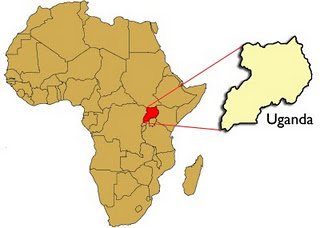 |
| The Karamoja region lies along the northeast edge of Uganda |
The
Orthodox Presbyterian Uganda mission has been in the Karamoja region since
2000. The goal of the Mission is to labor, with the grace given by Christ, to
establish an indigenous church that is self-supporting, self-governing, and
self-propagating. Currently, there is no
indigenous reformed church in Karamoja. The members serving on the Karamoja
station labor in the areas of evangelism, church planting, leadership training,
village Bible instruction, literature production, literacy training, medical
care through the work of Akisyon a Yesu Presbyterian Clinic, community health
instruction, and other works of mercy such as vocational training, well
drilling and the operation of a work-for-food farm.
I have been appointed by the Orthodox Presbyterian Committee on Foreign Missions to serve as a missionary associate to Karamoja, Uganda starting at the end of August, 2015. My plan is to be in Uganda for just over 11 months, returning August 2016. While there, I will have several roles. First, I will assist in the work of the Karamoja Education Outreach (KEO). In order to equip children who will be entering the public schools, KEO functions as a preschool for five-mornings per week, teaching basic Karimojong literacy, numeracy, health, Bible, and simple English lessons. In addition, KEO tries to provide early-morning and afternoon lessons for shepherd boys and girls who have to help their families at home and thus will probably never be able to attend school. KEO collaborates with the nearby public schools, seeking to support them and increase the Christian witness and outreach through education. My role within KEO will consist of teaching, possibly helping with local literacy outreach, and connecting with the local children.
I have been appointed by the Orthodox Presbyterian Committee on Foreign Missions to serve as a missionary associate to Karamoja, Uganda starting at the end of August, 2015. My plan is to be in Uganda for just over 11 months, returning August 2016. While there, I will have several roles. First, I will assist in the work of the Karamoja Education Outreach (KEO). In order to equip children who will be entering the public schools, KEO functions as a preschool for five-mornings per week, teaching basic Karimojong literacy, numeracy, health, Bible, and simple English lessons. In addition, KEO tries to provide early-morning and afternoon lessons for shepherd boys and girls who have to help their families at home and thus will probably never be able to attend school. KEO collaborates with the nearby public schools, seeking to support them and increase the Christian witness and outreach through education. My role within KEO will consist of teaching, possibly helping with local literacy outreach, and connecting with the local children.
 |
| Village of Nakaale, Karamoja, Uganda |
My second task on the mission will be to
tutor some of the missionary children. Currently, the plan is for me to teach
Caleb O. (8th grade) science and math. Depending on my responsibilities
with KEO, I may also tutor Megan O. (6th grade) in a few subjects
and possibly get to teach logic to Josh T. (12th grade),
which, ever the philosophy major at heart, I am very excited about. Finally, my
last responsibility will be to jump in and help wherever needed.
I am thrilled by the possibility to finally serve on the mission that I
have heard so much about. I believe that God has been preparing me over the
past several years in many ways, from my enjoyment of soccer (or football)
which the local children love to play, to my experience in adventure education,
which I anticipate will be helpful both in my work teaching and for life in
Karamoja—an adventure in itself, I am quite sure! Thank you for your
consideration and prayers.
Subscribe to:
Posts (Atom)