Tuesday, April 5, 2016

Memories of Grandpa Mac

Everyone living on a foreign mission field must face the reality that changes take place back home without us. When I first came to Uganda last September, I fully expected to not meet my newest niece until she was nine months old. Sadie was born in November; I got to see pictures and looked forward to meeting her in person. When my next oldest sister got engaged (as she warned me would probably happen while I was gone), I began looking at plane tickets. Thanks to the generosity of many people, especially the engaged couple, I was able to fly home, meet my two-month-old niece, spend Christmas with my family, and attend the family reunion that was my sister's wedding on January 2. I also got to see my Grandpa Mac one last time.
My Grandpa, Alan McIntyre, died last Friday morning. When I first came to Uganda, Grandpa was in the process of looking into treatment options for his cancer. On one level, I knew that there was a possibility that Grandpa would not be here when I return in July, but I didn't think that possibility would prove true. Changes happen, but it is hard to really expect them to happen in one's absence.

Grandpa's funeral is scheduled for April 9. I will be here in Karamoja. The missionary community here is very kind, supportive, and caring. I think what I will miss the most about not going to the funeral is the chance to swap Grandpa Mac stories with my family. There are a lot of good Grandpa Mac stories. Since I won't be able to do so in person, I would like to share some of my memories of Grandpa Mac with the family and friends who read this blog. 

So many memories! Watching Grandpa steam corn on the cob for the Toewes family reunion; going with him to the woods behind their house to scare starlings with the gas canon or 22s; drinking Grandpa's ice tea, which my siblings and I called "brown stuff;" Grandpa helping and teaching my siblings and me to fish at a friend's pond, untangling our lines and helping us attach worms; taking us to explore the Susquehanna river bed during a drought; taking us swimming in the neighbor's pool; taking us out in his motorboat, which, as I recall, became a rowboat when the motor stopped working; taking us for walks in the woods in search of wine berries; going hunting and shooting. Grandpa Mac was an outdoorsman.

As I think back over my memories, I realize that many of the things I enjoy doing now, Grandpa was involved in. For example, as a kid, I played in his work shop many times. I remember one time tearfully examining the wobbling structure of wood and nails that I had put together in the hopes of making a chair. And I remember Grandpa telling me that making things with wood is hard, even for carpenters. I have never tried to make a chair again, but I still enjoy playing in wood shops and working on less ambitious projects.

It was Grandpa Mac who taught me to ride a bicycle without training wheels. He held on to the back of the bike seat to keep me steady while I pedaled around the parking lot of the church near my Grandparent's house in Lancaster. I didn't notice when he let go. I suddenly realized that Grandpa is standing over there, and I am biking all by myself! 

In 2012, Grandpa went to the Cleveland Clinic for cancer treatment. During those several weeks, he and my Grandmother stayed at "The Hope Lodge," a place at which those undergoing treatment and their caregivers could stay for free if they lived more than 50 miles from the Clinic. In the summer of that year, I had the privilege of partaking in a fundraiser for the Hope Lodge: a four-day bicycle ride across Ohio. I rode the bike that my grandparents gave me as a high school graduation present. The following summer, I biked across the U.S. with a small team in order to raise funds for a scholarship at my alma mater, Geneva College. My parents and grandparents joined the team for a short time. On a foggy morning in Indiana, I biked with my Mom and Grandpa Mac for 20 miles. A long way from training wheels.

Then, of course, there is hunting and shooting. (Despite the many fishing excursions Grandpa took me on, I am afraid I will never have his enjoyment of the sport). I remember shooting one of Grandpa's BB guns in his back yard with my siblings. I might have been eight. Grandpa took me deer hunting when I was 12. When my Dad and brother shot their first bucks, Grandpa marked their foreheads with some of the blood. I did not succeeded in downing a buck until I was 23. Grandpa wasn't there to perform the ritual, but I asked my boss, who came to help drag the deer, to do it. One time, Grandpa, my dad, my older brother, and I went pheasant hunting with a friend of Grandpa's who had a pair of bird dogs. I wasn't actually hunting because I was too young, but the pheasant stew Grandpa made afterwards was delicious. Grandma had a rule: you kill it, you grill it.

During high school, college, and the few years after, I did not go on as many adventures with Grandpa Mac, but we swapped stories. Sometimes, I joined him on his dog-walking-loop, and he would point out different animals or points of interest along the way. Grandpa was certainly not the most talkative member of the family, but his stories and occasional one-liners at the dinner table were always entertaining. When I went to work at Ligonier Camp and Conference Center after college, we continued swapping stories over the phone periodically. I'd tell him about wood cutting day at camp, about any biking adventures I'd had lately, and about any interesting wildlife I'd seen. Most of his stories involved wildlife, whether animals he'd seen recently or many years ago.

While at Ligonier, I was advised to get a goose hunting license. I had never been goose hunting before, nor did I have a shotgun, but it sounded worth a shot. I asked Grandpa if he had a 12 gauge I could borrow. But "borrow" did not seem to be a part of Grandpa's vocabulary. He gave me his single-shot, break action shotgun, which, he explained, his father had given him when he was 12 years old. As he handed it to me, he said, "I'd appreciate it if you didn't sell it." Sell it? Absolutely not, that shotgun is going to be in the family for many years to come!

This coming May, I plan to go on a safari. Grandpa Mac always wanted to go on an African safari. I had hoped to be able to take lots of pictures and share them and the accompanying stories with him when I go back to the States. I'll still go, and take pictures, and think of Grandpa. We'll have lots of stories to swap when we meet again in glory. 


Tuesday, March 22, 2016

Language and Language Learning

As you can probably tell from the title of this post, I would like to share a little bit about my experience with the Ngakarimojong language. First, a disclaimer: I make no claims about the accuracy of the information I here set forth. I am not a linguist, nor have I spent anywhere near enough time studying this language to offer a systematic, meticulous introduction to Ngakarimojong. What I offer here is merely my own nerdy thoughts based on my limited experience and study. 

Allow me to show off for just a few seconds. Ejok-a? Engaleo-a? Erae ekaakiro Fiona. Erae ayong amalim. Abunit ayong ka Amerika. Eyai ngikur tooma ngakipi-a? Ok, I am done showing off. Now, I'll use those sentences as a springboard. 

Hands down, the word I say most often is, Ejok. The basic translation is "good." However, it is also used as a greeting. If I say, Ejok-a? (the "-a" makes it a question), then I am asking, "Is it good?" or, to be more grammatically proper in English, "Is it well?" The answer is, Ejok! or Ejok a nooi! for emphasis, if one is feeling very good. On top of using ejok as a greeting, it is also the most common word for saying that something is good. As far as I know, Ngakarimojong does not have the plethora of synonyms for "good" that English has. In English, something can be outstanding, brilliant, terrific, wonderful, amazing, superb, alright, decent, acceptable, etc. etc. In K-jong, something can be ejok or ejok a nooi.

When I and my KEO colleagues first started learning the language, Martha (our missionary of oversight) oriented us by explaining the rules for pronunciation and equipping us with several pages of printed notes with common and useful phrases. For example, Engaleo-a? is a question meaning "Is it well," and the proper answer is Ee, engaleo. But if you are asked, Ingale iyong-a? (Is it well with you?) then the proper response is Ee, angale. At first, I learned by rote memorization. Which meant that I often got the answers confused, since, to my English-trained ear, engaleo, ingale, and angale all sound very similar. In time, however, I came to understand the the prefixes reflect third, second, and first person, respectively.

You may have noticed, in the example of Ngakarimojong that I wrote towards the beginning, the words ayong and iyong. Perhaps you thought the latter one was a typo, but, no. Ayong means I, and iyong means you.  The difference is one letter, one sound. Actually, ayong can mean I or me, depending on which syllable is emphasized, but that distinction is a bit beyond our capacity to keep straight or even usually to hear. 

It sounds like a truism that, in Ngakarimojong, vowels are incredibly important, but let me explain. Vowels indicate 1st, 2nd, or 3rd person; they indicate gender (amalim is a female teacher while emalim is a male teacher); and there are pretty much never two consonants that are not separated by at least one vowel. Wtht vwls n nglsh, y mght pssbly b bl t rd ths. Without vowels in Ngakarimojong, there is no way. Jk. Ngl? R yng mlm. Yeah, no idea. Not to mention the fact that changing a vowel can sometimes be the difference between "rock" and "snuff," between "brother-in-law" and "drunkard." Forget your P's and Q's, watch out for your A, E, I, O, and Us.

Speaking of letters, Ngakarimojong uses the Roman alphabet, minus a few letters (F, H, Q, V, X, Z) and with the addition of one: a single character for the "ng" sound, pictured below. While this is not a new sound for us English speakers, it is the first sound of many words, which is a bit difficult. English doesn't have any words (that I know of) that begin with the "ng" sound. Try starting a word with "nga." Not "nya." "Ng." Form the sound towards the back of your throat. See? It's a bit difficult. For the first few days of language learning, I practiced saying, "Song. So-nga. Nga!" until I could successfully start a word with Ng.

Happily for those of us who are trying to learn the language, Ngakarimojong uses a phonetic alphabet in which there are very, very few wierd rules and exceptions like "I before E except after C, blah, blah, blah." There are only a handful of letter combinations that change the sound of the letters. Instead of "ch," Ngakarimojong uses "c." Usually, vowels each make their own sound, even when paired (or tripled). Thus, rather than having a long vowel, diphthongs are spelled out. In English, the long A sound, as in "fate," or "weight" (which doesn't even have an A in it!) is actually the combination of two sounds: eh+ee, represented in K-Jong simply as "e-i." There are only a few combinations of vowels that make a different sound.

Becuase K-Jong is so beautifully phonetic, it is fairly easy for someone literate in English to learn to read it. Except when it isn't. You see, as best as I can figure, easily half of the language is composed of prefixes, suffixes, and other syllables that get inserted in somewhere. Here is a very simple example. Kingit means "to ask." Turn it into Akingiset and you have "question," or perhaps more literally, "thing that asks." To make it plural, add Nga- and -a for ngakingiseta. So, sometimes words get rather long and cumbersome.  

Now, combine that with masculine/feminine and the fact that there seem to be a lot of irregular plurals. Oh, and I almost forgot directionality. With the addition of different syllables, one can indicate that so-and-so is doing the action for someone, to someone, with someone, to me, to you etc. I'll be honest, I do not understand the directionality yet, so I am afraid I can't give you a better example. At any rate, a native Ngakarimojong speaker can be very precise with a single word. In English, the word "give" stays the same regardless of who is giving what to whom; not so in K-Jong. 

Memorizing vocab words is useful and necessary, but grammar is the fascinating part. Grammar sets the boundaries and rules for the playing field. Quite frankly, I am just barely scraping the surface of the grammar. Verb tenses are still somewhere between a mystery and a muddle to me. I can read K-Jong much better than I can speak it, to the point where I can sometimes catch errors in translations of our Bible lessons. However, I do not know enough that I can correct said discovered errors. 

So, after this brief introduction to Ngakarimojong, perhaps you can decipher what I wrote at the beginning. Nabo (Again). Ejok-a? (Hello.) Engaleo-a? (Is it well?) Erae ekaakiro Fiona. (My name is Fiona.) I totally forgot to talk about possessives. Oh well. Erae ayong amalim. (I am a teacher.) A female teacher, as you can tell by the fact that I said A-malim and not E-malim.  Abunit ayong ka Amerika. (I am from Amerika.) Note the sentence structure: verb-subject-object, literally something along the lines of "Come from I America." Eyai ngikur tooma ngakipi-a? (Are there worms in the water?) Just another useful phrase. 


Wednesday, February 17, 2016

Animal Life: Wild and Domestic


Before I left for Uganda, two of my good friends, who shall remain nameless, instructed me to bring back specific and unique souvenirs for them: an elephant and a giraffe. They assured me that I should have no trouble smuggling a baby elephant and a baby giraffe in my luggage. What are two checked bags for after all? Well, despite living in Africa, I do not encounter these mammals on a regular basis. In fact, the last time I saw either of them was in the Pittsburgh zoo. In this blog, I would like to describe some of the animal life that I do encounter. I must admit, however, that I am not even an amateur zoologist; what I here write is based only on my casual observations from everyday life and what I have heard from others here in Karamoja. For more information, you could always try Wikipedia...or come for a visit.

As I said, there are no elephants or giraffes here. According to one of the K-jong workers, there used to be elephants in this area, "but we ate them all." I don't know how long ago. So, what mammals are there in Karamoja? Cows, goats, mangy dogs, and the occasional cat. Those are the ones that I see on a regular basis. The cows and goats are the most prevalent. It is not uncommon to have to clap or hiss at cows to get them to move off the road, and for goats wander, bleating, into our church services (I mean that literally). Allegedly, there are hyenas up the mountain that might occasionally wander down and cause problems. For the most part, though, our large mammals are relatively domesticated. Many of them even live in villages.


Goats outside Nakaale Presbyterian Church on a Sunday morning

One other mammal that we have in Karamoja is rats. I personally haven't seen many, but I know there are several kinds. For example, there are the kinds that come out at night and nibble on people while they are sleeping. Those rats are killed on sight. Then, there are also bush rats. When the K-jong burn fields, young boys often stand at the ready to catch and kill the bush rats who are fleeing the fire. According to our community health education, well-cooked bush rat tastes like chicken. I would not be surprised to learn that Karamoja is home to many other types of rodents--I've been told that porcupines live in the foothills of the mountain--but these seem to be the more common ones.

On to reptiles. Not my favorite. But also fairly common. We have lizards, toads, and snakes. Of those, geckos are the ones I encounter most frequently. I'm no herpetologist, but I'd say I've run into at least three different kinds of gecko. There are the pale brown ones that I typically see in my shower a couple times week. This afternoon, when I took down my mosquito net to shake it out, I accidentally captured one of these lighter-colored reptiles. They are very speedy, and, consequently, I have not yet managed to get a good picture.

The third kind of gecko is significantly larger, dark green, with yellow stripes. The one pictured likes to hang out in the window sills of my building. I call him Buddy. As in, "Oh, hey there, buddy, I didn't see you there." Overall, though, geckos are fine; they don't bother people (except when one accidentally steps on them [ahem]), and they eat mosquitos.


A few weeks ago, we found a monitor lizard in a hole on property. We speculate that he was sick and crawled down there to die, which he did a few days later. Evidently, then, there are monitor lizards in Karamoja.

There are also toads. One found its way into my colleagues' room recently. I did not observe the action, but I heard the commotion and many cries of "Eew, gross!" Another toad (let's call him Tom) occasionally makes an appearance while I brush my teeth at night. Tom is only slightly smaller than my fist.

And snakes. Unfortunately, we do have snakes, though I have not seen many, for which I am thankful. Here are the snakes I've seen so far: a couple small, baby black mambas, which met there demise in the form of a field hockey stick kept for such purposes; a 10+ foot long python or possibly boa constrictor which was already dead when I saw it (picture included); and a yard-long-ish snake that might have been a puff adder. The puff adder was in a tree above one of our village outreach "schools." Needless to say, we relocated for the morning, and a handful of young men from the village came to evict and kill the snake. As you can see, snakes are not really tolerated here. I don't know if there are any non-venomous snakes in the area, but the standard protocol is to assume it is dangerous and beat it do death. I think that is enough about reptiles.


Birds. There are many, many birds, the vast majority of which I do not know. Here are just a few:
Pied / Vested Crow. They are quite loud and frequently around the compound.

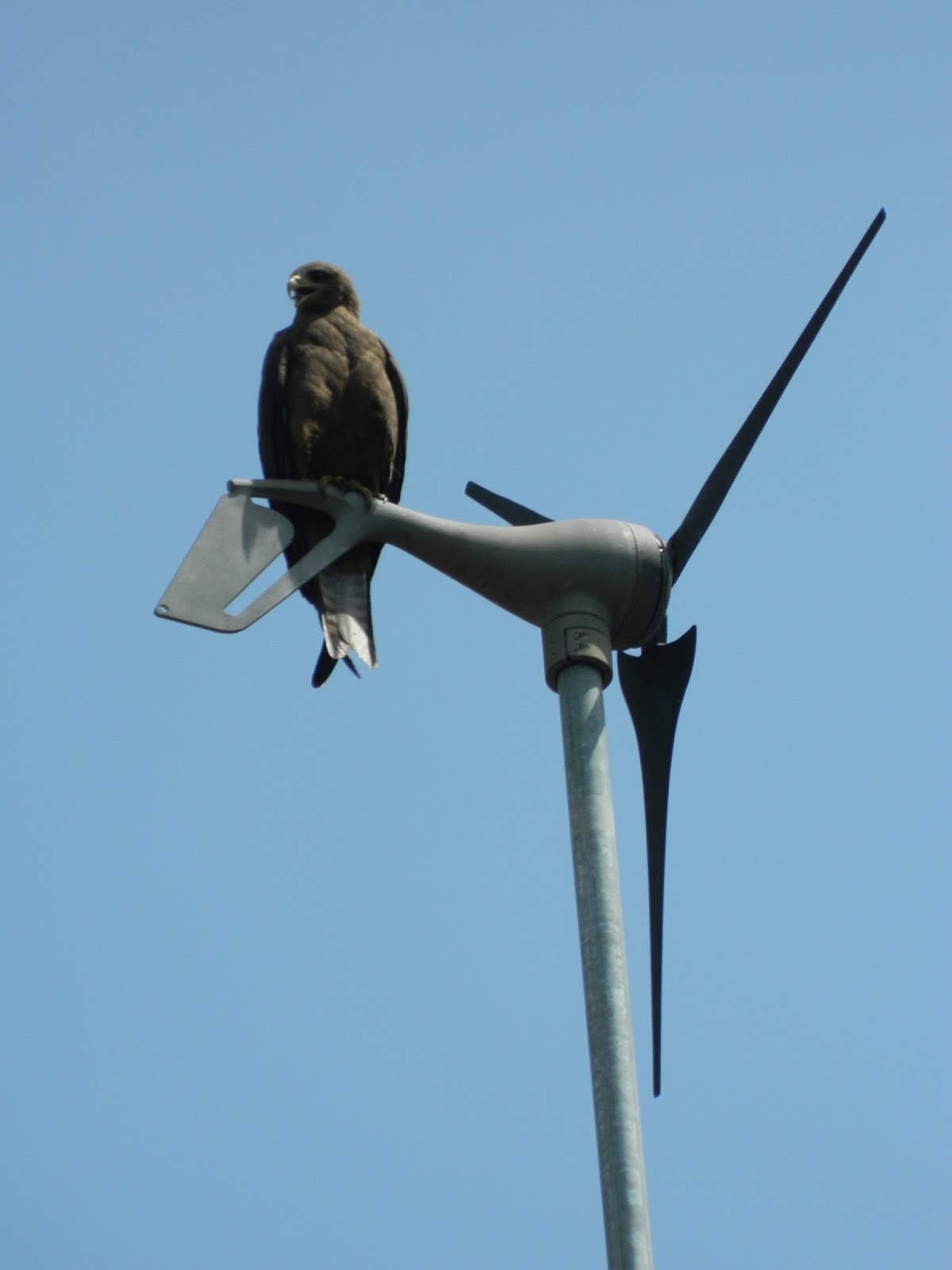
Brown Kite
Small, colorful bird outside my window

Don't know this bird either

Other than insects, which I won't go into, that is an overview of the animals I most frequently encounter in Karamoja. Perhaps not the most exotic selection. The nearby Mount Kadam is home to baboons, colobus monkeys, and no doubt many other animals. Elsewhere in Uganda, on the game preserves, I understand there are even elephants and giraffes. But here in the bush, the animals are too common to seem wild.

Saturday, January 30, 2016

Taste of Karamoja

When I was back in the States, one of the more common questions about life in Uganda was, "What is the food like?" Because our diet on the mission compound is notably different from that of our neighbors, there are two parts to this question and answer.

In thinking about the local diet, I am reminded of a quote from the animated movie, Atlantis: "I got yer four basic food groups! Beans, bacon, whiskey, and lard!" Here, the four basic food groups might be as follows: sorgum (a type of grain); cassava (a potato-like, starchy tuber); maize; and beans. Translation: starch, starch, starch, and incomplete protein. Ok, so that isn't the whole kitchen sink, but, based on my observations, those seem to be the staples. 

A word about sorgum. From what I observe, there are several different ways to prepare sorgum. One of them is to make a sorgum beer, (which happens to be organic and naturally gluten free). Usually, this beer is served hot for breakfast. From the mission compound in the morning, we can hear women calling in the villages, announcing that the beer is ready. Throughout the day, this beer can be watered down to make it last longer. The beer residue is also edible, although I have been told by some of the missionaries that it tastes nasty. Personally, I have yet to taste any beer I like, so I can't imagine enjoying a sorgum beer residue. 

Additionally, sorgum can be fried or made into porridge or posho. Posho, or "atap" in the local tongue, is like porridge but thicker. Porridge/posho can also be made out of maize, rice, or pretty much any available flour. One can serve posho slightly sweetened, plain, or a fermented. A few weeks ago, while I was in one of the villages, a KEO teacher told me that one of the village women wanted us to eat some porridge. Usually, I, as a weak-stomached foreigner, try to avoid eating village food, at the advise of the more experienced missionaries. However, the offer of hospitality seemed so direct that I thought I would risk the consequences of eating whatever was put in front of me. It looked like a very full bowl of cream of wheat. It tasted like vomit. Obviously, I am no connoisseur of porridge, but I would hazard a guess that I got the fermented variety. I was extremely grateful for a reason to excuse myself and not partake of any more of the porridge. The Karimojong KEO teachers, however, apparently found it quite acceptable, because they finished it in the few minutes while I was elsewhere.

Cassava: usually boiled around here, but if you go down country you can find cassava fries. My understanding is that cassava is pretty much straight starch with little to no other nutritional value. Very similar to potatoes, which, as you probably know, are valuably mostly for their ability to transport Ketchup. Maize: can be turned into a flour or porridge, or roasted intact and eaten directly off the cob. Rice: it's here. Not quite as prevalent as sorgum, but there are some places within walking distance that can grow rice. Chapatis! I almost forgot to mention chapatis! Chapatis are rather like thick, greasy tortillas. Delicious. A common Ugandan breakfast food downcountry (i.e. not so much here in K-ja) is essentially a breakfast burrito made in a chapati. By the way, chapatis, I believe, are Indian in origin. Courtesy of colonialism. 

Protein: Yes, there are beans. I don't eat them, or know much about them, other than that, the other day, one of my KEO friends, Lokalei, said he had beans for breakfast. Beer and beans--sounds lovely. Other sources of protein include ground nuts, (which are very similar to peanuts, but different,) chicken, goat, and beef. Despite the fact the the Karimojong are cattle herders, meat is eaten quite rarely, and generally only for special occasions. Personally, I recommend boiled goat over roasted, and the hair-free cuts if given the choice. 

Fruits and vegetables: I must admit that I don't know what or if fruits and vegetables are a regular part of a Karimojong diet. If I had to guess, I would say that cabbage, tomatoes, and bananas are among the more commonly consumed produce, but I have rarely, if ever, seen anyone eating them outside the mission compound, so I cannot say for certain. 

Considering that this is largely a subsistence farming culture, it makes sense that most people's diets are fairly restricted. In theory, if the land one owns or rents can only produce sorgum, then that is what one grows. And if sorgum is the only crop everyone in the village can grow, then the price of sorgum during harvest season drops as the market becomes inundated. As a result, one may or may not have enough cash to purchase the fruits, vegetables, and other commodities grown elsewhere. So, one eats (and drinks) sorgum and feeds sorgum posho to the hungry child because it will fill the child's stomach. An imbalanced diet is better than no diet.

In the previous paragraph, I said, "In theory," because I am not in a position to say with confidence whether or not sorgum is in fact the only viable option for the sandy soil of Nakaale. Based on my conversations with some of the KEO teachers, I believe that sourgum is the most drought-resistant crop they have access to, and therefore, it is the safest investment for farmers. But there are other factors as well that contribute to the lack of diversity in farming, not the least of which is theft. But that perhaps is a topic for another blog. At any rate, here on the mission compound, which is also in Nakaale parish, we "cultivate" (read "throw seeds in the ground and see what happens") a variety of fruits and vegetables: mangos, pomegranates, passion fruit, bananas, guavas, papaya, oranges, lemons, tomatoes, pumpkins. Right now, it is mango season, which is delightful! During the farming season, the mission also operates a farming project, which has successfully grown a couple fields worth of peas. 

And that leads me to the food that we eat here on the mission compound. First, beans and rice again. Every week day, unless one opts out of the lunch count, there is beans, rice, cooked cabbage, and sometimes g-nut sauce for lunch. Other than that, our food can be divided into three different categories: food you can get in the nearby trading center of Namalu, food you can get in the city of Mbale 2+ hours away, and food you can pretty much only get from the capital, Kampala, or from the States. From Namalu, we can get staples like flour, sugar, salt, Blue Band (margarine type butter substitute), rice, beans, and some seasonal vegetables (usually, bananas, onions, cabbage, tomatoes). From Mbale, we can get most other things that we use on a regular basis: long-life milk, pasta, canned goods, meat, etc. Then, there are those rare and exciting delicacies like pepperoni and chocolate chips that only come from Kampala or the States.

In short, then, food here on the mission is similar to food in the States, just with substitutes. For example, instead of lettuce, we eat cabbage salads. Instead of sour cream or cream cheese, we use homemade plain yogurt. Almost everything we eat, we make from scratch. Honestly, the biggest difference, I think, is the planning required. If you need an ingredient, it is not as if you can just quickly drive to Walmart. I am still figuring out how to gauge groceries to last until the next Mbale trip. I am getting better at menu planning, though. I have declared Wednesday to be breakfast for dinner night. Last Wednesday, I made passion fruit pancakes. This week, I'll try my hand at quiche.

Friday, January 8, 2016

Here and Back Again

Right now, I am sitting in the Entebbe Flight Motel in Entebbe, Uganda, trying not to give in to the temptation to take a nap. Yesterday, I was counting down the hours until my flights would depart or arrive; today, I am counting down the hours until acceptable bedtime. Six hours to go.

Four months and a week or so ago, I arrived in Uganda for the first time. My flights--though long--were uneventful, with smooth connections and successful retrieval of luggage at the end. Arriving in Uganda roughly 23 hours later, I spent that first night in the Entebbe Flight Motel, which is where I am now. The next day, I and my two KEO colleagues were driven to Mbale. Everything was new to me. Everything was worth staring at: the droves of motorcycle taxis, the staggeringly large loads people carried or wheeled around on bicycles, the sometimes terrifying traffic "patterns," the houses and buildings, the roadside markets, the fields of sugar cane and ubiquitous banana trees. I don't remember feeling particularly jet-lagged in the midst of the thrill of finally being here..

There are some notable differences this time around, starting with my flying experiences. My friend, Jill, dropped me off at Dulles International Airport, and I joined the queue of--no exaggeration--50-70 people in front of the Ethiopian Airlines check in. Perhaps that should have been my warning that things were not going to go as smoothly as I'd hoped. However, despite the length of the line, I got to my gate just as the plane started boarding. My seat was at the very back of the plane, I had a window seat, and the seat next to me was unoccupied. Pretty ideal sleeping conditions. (To my extroverted friends who would be horrified by such a situation, I had a few long-ish and pleasant conversations with a woman from Nigeria, which is far more talking that I usually do on planes, regardless of who is sitting next to me.) Dulles to Addis Ababa, Ethiopia: on schedule.

Addis Ababa to Nairobi, Kenya: about half an hour late. My layover time in Nairobi was only an hour and 40 minutes, so I was a little worried, but not too much. I figured my layover in Nairobi was long enough for a slightly late arrival, or long enough for me to get confused in the airport and find myself at immigration instead of the terminal. Unfortunately, there was not enough tie for both to happen, which they did. When I arrived at the correct gate at 2:20, 30 minutes before my flight was scheduled to leave, I was told that the gate was already closed. The next flight for Entebbe through Rwandair was to leave at 10:10 pm. My average layover time in Nairobi to date is eight hours. I've been there twice.

Despite having nearly eight hours to figure out ticketing, through some quirk of it being a Rwandair flight ordered through Ethiopian Air, the Transfer Services agent was unable to rebook my ticket, although I was able to buy a new one. After waiting for roughly seven hours by the Transfer Services desk and hourly inquiring the status of my ticket, I finally had my boarding pass in hand...approximately 30 minutes before the scheduled take-off. As I hurried toward the gate, I was afraid that it would again be closed. Happily, it was not. At that point, I realized that my checked baggage retrieval stub was still with one of the ladies at the Transfer Services desk. Rather than risk being turned away from another flight, I checked with a boarding official, who assured me my luggage was good to go. Nairobi to Entebbe, Uganda: more or less on schedule.

It was a little after 11:00 pm when I arrived at Entebbe airport. My luggage, on the other hand, did not arrive until 12:30 am. Not having the baggage stubs, thankfully, did not prevent me from collecting them, although I would recommend keeping track of all baggage and boarding pass stubs until one reaches one's final destination and can account for one's luggage. Preparation is the best preventative for emergencies. 

That is my series of airline-related unfortunate events. Looking back at it now, it doesn't seem like that big a deal. I got here. My stuff got here. It just took longer and cost more than I originally thought it would. In Dulles, I began reading a book titled, Openness Unhindered  by Rosaria Champagne Butterfield. One line in particular stood out to me: "Lower your expectations; increase your joy." That was a hard quote to think about during those hours in Nairobi airport, while I still was not sure I would make it onto the next flight. I was not "in the mood" to do any such thing. I was frustrated. And I was sad. 

As you probably gathered if you weren't already aware, I recently just spent three weeks back in the States. The main reason for returning to the States was my sister's wedding, which was January 2. (As my mother says, the wedding went off without a hitch except for one). While back in the States, I also got to spend Christmas with my some of my family, meet my newest niece, see the rest of my family at my sister's wedding (which felt to me like a family reunion with a wedding thrown in), go rock climbing twice, visit good friends, play several dozen games with different groups of friends/family, and attend Ligonier Camp's staff reunion. In other words, I got to spend time with almost all of my favorite people. It was so good! So good, in fact, that well before it was time to return to Uganda, I was already dreading leaving and saying goodbye. 

That's another difference between this time coming to Uganda and last time. Last time, not that I wasn't sorry to say goodbye, but I was also excited by the unknown adventure of going to Uganda. Now, I have a better idea of what living and working in Karamoja is like. In short, it is a mixed bag of good things and hard things. And, after a month, it feels extraordinary like ordinary life. After three weeks of an extraordinarily sweet Christmas vacation with friends and family, it can be hard to return to ordinary life. 

One important thing, though, is the same on this return trip as it was on my first arrival: God's promises are true, and His Word brings comfort and encouragement. If I were to detail every passage God has brought to my attention, that would have to be a separate blog entry, so I will just mention a few. Psalms 23, 30, 130, and 131 for starters. John 14 and 15. Mark 10:28-30:

"Peter began to say to Him, 'Behold, we have left everything and followed You.' Jesus said, 'Truly I say to you, there is no one who has left house or brothers or sisters or mother of father or children or farms, for My sake and for the gospel's sake, but that he will receive a hundred times as much now in the present age, houses and brothers and sisters and mothers and children and farms, along with persecutions; and in the age to come, eternal life."  Currently, this passage sounds almost more like a description than a promise.

John 14:1-2: "Do not let your hearts be troubled; believe in God, believe also in Me. In My Father's house are many dwelling places; if it were not so, I would have told you. If I go and prepare a place for you, I will come again and receive you to Myself, that where I am, there you may be also."When I was back in the States, I was asked several times, "Where are you from?" I've lived just over half of my life in Syracuse, NY, but for the past 12 years I've been in Western Pennsylvania, but my parents are now in Texas, my permanent mailing address is my uncle's house in Pittsburgh, and I am have most recently been living in Uganda. Typically, that's more information than the average inquirer was looking for. I eventually started answering by saying, "Well, my bed is in Uganda." Technically, though, it's not my bed, but I don't feel like a guest when I sleep there. I am certainly not homeless, but home is...complicated. Ultimately, though, Jesus is preparing a place for me. 

Saturday, December 5, 2015

Check the Calendar!

When I was in high school, the number of people living in my family's house was usually around 10 or 11. That number included my parents, my dad's parents, my siblings and I, and a couple college students. Breakfast typically resembled a logistics meeting over cold cereal. Ever the organizer, my mother invested in a dry-erase calendar in order to help coordinate the various comings and goings of the household members. "Check the calendar!" became my mother's mantra and answer to many schedule-related questions. With all the recent traveling and upcoming traveling plans of the missionary community, I think we could benefit from a similar organizer. That, and maybe I would be able to keep track of what time of year it is.  

Today is Thanksgiving on the Nakaale Mission Station. Outside, it is a balmy 80 degrees Fahrenheit. In order to remind myself that it is in fact December 5, I am listening to Manheim Steamroller, which, to be honest, may be less than helpful to blog-writing as it makes me think of and miss my family, and is only marginally succesful in convincing me that Christmas is less than three weeks away. While our Thanksgiving celebration scheduled for this evening will certainly include a bountiful meal (complete with pumpkin pie made from scratch), it will also include 5:00 bocce in the yard and possibly some other outdoor activities that I don't typically associate with Thanksgiving Day. 

Yesterday, at Angela's instigation, many of the MAs and MKs (Missionary Associates and Missionary Kids) made and decorated Christmas cookies. Then, Rachel made guacamole from some avacodos that grow on the compound, I made tortillas from scratch, and that was dinner. Who knew that avacodo season overlaps with Advent? To some of my friends and fellow guac lovers, that may seem only right and fitting. All this to say, my sense of seasons is quite discombobulated. Even here, the weather still cannot decide whether to be wet or dry season. However, I am happy to announce that there is hope for properly orienting my internal calendar. But before I elucidate my upcoming travel plans, let me share at least a little about the comings and goings from November.

Last month, the Orthodox Presbyterian Uganda Mission, consisting of the Nakaale and Mbale stations, held their annual spiritual retreat. While they have at times held their "stratigic withdrawal" in locations that did not require much withdrawing (i.e. right here in Karamoja), this year the retreat was in Mukono. According to Google Maps, Mukono is about 260 km from Nakaale and should take five hours by car to get there. At least on one of those scores, Google Maps is lying. For the most part, whenever anyone from the mission here travels further downcountry than Mbale, they allow two days to get there. If the road to Mbale is good, the drive can take as little as two hours. Have you ever reflected on what an important word is "if"? The missionaries tell of stories when the drive took eight+ hours, and of other times when travelers to/from the mission had to spend the night in their vehicles by the side of the road, debating which, of open windows and mosquitoes or closed windows and suffocating heat, is the lesser evil. Providentially, however, our trip from Nakaale to the tarmac was reletively smooth. There were only two especially muddy places that required the passengers to disembark while Jesse navigated through mud pits and/or offroaded around obstacles. 

The crew I was traveling with stopped in Mbale for lunch (I had the first and only milkshake I've had since leaving the states!) before continuing on to Jinja, where we spent the night at a Baptist-run ministry. The next day we drove the rest of the way to Mukono. Our destination, Vision for Africa Hotel, is another NGO Christian ministry that includes a hotel, a school, carpentry, pottery, and beautician vocational training, various scholarships programs for students, and possibly more. When I  wandered over to the pottery shop looking curious (or maybe clueless), one of the workers kindly gave me a fascinating tour starting with the processing of the clay they use to the firing and different coloring techniques of their art. 

The retreat officially started Tuesday afternoon and concluded Friday morning. During those days, the missionaries enjoyed times of singing and teaching, fellowship, an extraordinary number of card games (particularly Euchre), a swimming pool, and even a cafe. On a couple instances, I was able to put my camp hat back on and organize funtivities: an afternoon soccer game and an evening game of fishbowl. One of the highlights of the retreat for me was getting to know Sarah, an MA on the Mbale station who arrived there within a week of my coming to Karamoja. It was encouraging to compare notes about our different experiences and to learn more about the work in Mbale.

On our way back to Nakaale after the retreat, I and some of my colleagues stayed an extra night in Mbale so that we could take a day trip to Sipi Falls. From my limited experience of hiking in Uganda, I would say that there are at least three ways in which it differs from my hiking experiences in the states. First, I don't think the concept of a switchback has been introduced yet in this country. Secondly, one does not go hiking without a guide, nor often without the addition of a handful of local kids, some of whom are trying to make some money and some of whom are just along for kicks and giggles. Thirdly, hiking paths often run through what I would consider someone's yard and/or someone's field of maize, coffee farm, or banana grove. I am not sure what the property laws of Uganda are, but I'd hazard a guess they are different from the States' laws.  

When we returned to Nakaale, I again resumed my reletively normal routine. However, there has been quite a bit of traveling over the past few weeks. The most noteable journey is that of the good doctor and his family, who are returning to the states permanently after seven years of service here. Please pray for Dr. Knox and his family as they transistion, for the work of the clinic and the clinic staff as they continue the ministry without a doctor, and that God would provide a doctor (or even two) quickly. Another major change on the mission is that Tricarico family is also returning to the states in less than a week. While we are grateful to God that He has already provided another pastor to come serve here with his family in February, we will all miss the Tricaricos greatly. Please pray for the Tricaricos, those who are still here, and those preparing to come.

Speaking of traveling, I am also returning to the states for a few weeks. I leave from Nakaale this coming Friday, and fly out of Uganda on Monday, Dec 14. Please pray for smooth and safe travel; in particular, I have a short layover in Addis Ababa, Ethiopia and would be thrilled to not miss my flight. The main reason for my trip is that my sister is getting married on January 2. Other perks include being able to spend Christmas with my family and meeting my month-old niece...and hopefully recalibrating my internal calendar so that when I return January 6th, I'll be able to finally internalize that it isn't still August. 

Saturday, November 7, 2015

Adventures in Nakaale

As I start writing this blog, it is Monday evening, November 2. Somehow, it has managed to be both a fairly typical Monday and a remarkably good day. Here are some remarks about it.

I got up around 5:30 a.m., read my Bible, and then went for a two-mile run, arriving back at the compound with just enough time to take a quick shower (cold, because that's the only kind available), eat breakfast, and join my colleagues to walk to the Preschool at 7:45. Because of all the rain lately, the walk to school was a bit of an adventure in an of itself. The erstwhile-culvert-now-river was almost up to the bottom of the footbridge. The stepping stones that lead to the footbridge were underwater. Thankfully, we were all accoutered with rubber boots. Thus shod, we bravely picked up our skirts and forded the foul deluge. The dastardly mud tried to ambush Rachel, but with a fierce cry of [ahem] defiance, she gained the bridge.
"In yon straight path a thousand
May wel be stopped by three:
Now who will stand on either hand,
And keep the bridge with me?"*

On Mondays, I go from the Preschool to Nakaale Primary School. This week, we are reading about Daniel and his decision to abstain from the king's food. When I arrived in the P6 classroom, there were only two students, but another two came shortly after I finished giving some context to Daniel. Four is a pretty typical number for P6 at Nakaale. The lesson booklets we use for the primary schools are written in both English and Ngakarimojong. Usually, I read a paragraph in English aloud first, then two students read aloud together in English, and then the remaining two students read the Ngakarimojong translation. For the next paragraph, the English and Ngakarimojong readers (students, that is; I stick to English) switch. While this Monday followed the normal pattern, two things happened that stood out to me. 

First, I paused the reading at one point to explain a bit more about the Jewish laws concerning clean and unclean foods. (Fun fact, the K-jong word for pig is "epege," which sounds very close to "a piggy." A couple of the boys thought this rather funny.)  Briefly and as simply as possibly to limit the effects of the language barrier, I tried to show how the laws about cleanness point to and are fulfilled in Jesus. Because of the work of Jesus, we can be clean before God. Engaging my students in conversation is difficult, but it seemed to me that Korobe at least was paying particularly close attention.

The second thing that was exciting to me is that one of my students asked an unpromted question! Loro asked, "What's a prophet?" And then another student, Lokiru, answered him: "A messenger of God"! I was pretty pumped. 

After teaching at Nakaale, I returned to the mission compound and prepared for my first math class with Caleb. Caleb is almost 13 and, in true homeschooler fashion, in 7th or 8th grade. I am tutoring him in Pre-Algebra and General Science. For our first lesson, we tackled adding negative numbers. "This is easy," he assured me. I advised him to enjoy it while it lasts. 

The rest of the day was uneventful. I prepared for Tuesday's science lesson, set up and played on my slackline, made dinner, and read some of G. K. Chesterton's Heretics. And started this blog. It was a good day.

* From "Horatius at the Bridge"